


In the world of industrial tank and pressure vessel manufacturing, the structural integrity and surface quality of every component are paramount. While the cylindrical bodies of tanks are relatively straightforward to process, the end caps—commonly referred to as dish heads, tank heads, or dished ends—present a unique manufacturing challenge. Their curved, complex geometries require specialized equipment to achieve a uniform, high-quality surface finish.
Whether you are manufacturing sanitary vessels for the pharmaceutical industry, food-grade storage tanks, or heavy-duty chemical reactors, investing in the right surface finishing equipment is crucial. This comprehensive guide explores the different types of dish head polishing machines, how they operate, and how to select the perfect system for your production line.
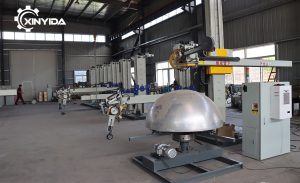
Why Precision Dish Head Polishing Matters
Before exploring the machinery, it is important to understand the role of dish head polishing in industrial fabrication. When a dish head is formed—whether through spinning, pressing, or stamping—the metal undergoes significant stress. Furthermore, welding these heads to the tank body creates seams that must be ground down and smoothed.
A high-quality dish head polishing machine serves several critical functions:
-
Hygiene and Sanitation: In food, beverage, and pharmaceutical applications, tanks must meet stringent standards (such as ASME BPE or FDA requirements). Polishing reduces the surface roughness (Ra value), eliminating microscopic pits where bacteria and product residue can accumulate.
-
Corrosion Resistance: For stainless steel tanks, removing the heat-tint from welding and smoothing the surface helps restore the protective passive layer, significantly enhancing resistance to rust and chemical corrosion.
-
Aesthetic Appeal: In many B2B markets, a flawless mirror finish is a hallmark of premium manufacturing quality, helping suppliers stand out in a competitive global market.
Because dish heads can be hemispherical, torispherical, or semi-ellipsoidal, the polishing equipment must be capable of adapting to changing radii and continuous curves without applying uneven pressure.
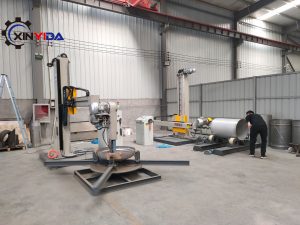
Main Types of Dish Head Polishing Machines
To meet diverse manufacturing demands, the market offers several distinct categories of dish head polishing equipment. The right choice depends heavily on your production volume, the size of the vessels you manufacture, and the required surface finish.
1. CNC Automatic Dish Head Polishing Machines
Computer Numerical Control (CNC) polishing machines are the gold standard for high-volume, precision manufacturing. These systems utilize advanced software to map the exact geometry of the dish head.
Once programmed, the CNC machine automatically adjusts the pressure, speed, and angle of the polishing head as it moves along the curvature of the dished end. This ensures an incredibly consistent finish across the entire surface. CNC polishers are ideal for manufacturers who produce large batches of identical tank heads, as they dramatically reduce manual labor, eliminate human error, and guarantee repeatable, flawless results.
2. Robotic Arm Polishing Cells
For facilities that handle a wide variety of tank shapes, sizes, and custom orders, 6-axis robotic polishing systems offer unmatched flexibility.
Instead of a fixed gantry, these systems employ an articulating industrial robotic arm equipped with specialized grinding and polishing effectors. The dish head is typically placed on a synchronized rotating positioner. The robotic arm can contort to reach difficult angles, smoothly transition from the interior curve to the outer flange, and seamlessly switch between different abrasive tools. While the initial investment in robotic integration is higher, their adaptability makes them a future-proof solution for highly diversified manufacturing floors.
3. Gantry-Style Turntable Polishers
When dealing with massive pressure vessels—such as those used in petrochemical plants or large-scale brewing operations—the sheer size and weight of the dish heads require heavy-duty machinery.
Gantry-style machines feature a massive, reinforced bridge structure. The dish head is secured to a heavy-duty motorized turntable on the floor. As the turntable slowly rotates the workpiece, a polishing head mounted on the overhead gantry moves radially from the center of the dish head down to the outer edge. These machines are engineered for brute strength and stability, capable of removing heavy weld seams and deep imperfections from thick carbon steel or stainless steel plates.
4. Semi-Automatic and Boom-Mounted Polishers
Not every fabrication shop requires fully automated CNC or robotic systems. For smaller operations, custom fabricators, or facilities dealing with low production volumes, semi-automatic boom polishers are an excellent, cost-effective alternative.
These machines typically feature a mechanized boom arm that holds the polishing belt or buffing wheel against the rotating dish head. While the machine supports the weight of the tool and provides the rotational power, a human operator manually guides the boom arm via a control panel or joystick. This setup significantly reduces worker fatigue compared to manual angle grinding while maintaining the flexibility to touch up specific areas or custom weld seams on the fly.
Key Features to Consider When Upgrading
When integrating a new dish head polishing machine into your workflow, look beyond just the structural type. Consider these vital features:
-
Abrasive Compatibility: Ensure the machine can quickly cycle through different media, from coarse abrasive belts for aggressive weld removal to sisal wheels and cotton buffs for final mirror finishing.
-
Constant Pressure Control: The best machines feature pneumatic or servo-driven floating heads that automatically maintain consistent contact pressure, regardless of minor variations in the metal’s curvature.
-
Dust Extraction and Cooling: Metal polishing generates dangerous dust and high heat. Look for machines with integrated wet-polishing capabilities (coolant sprayers) or heavy-duty dust collection systems to protect your workforce and prevent metal distortion.
How to Choose the Right Machine for Your Facility
Selecting the ideal dish head polisher requires a strategic assessment of your current and future production capabilities:
-
Assess Your Size Range: Determine the minimum and maximum diameters of the dish heads you process. The machine’s turntable and arm reach must accommodate your largest products.
-
Define Your Industry Focus: If you supply the pharmaceutical or dairy industries, prioritize CNC or robotic systems that can guarantee ultra-low Ra values with strict consistency.
-
Evaluate Floor Space: Gantry systems require significant vertical and horizontal clearance, whereas more compact robotic cells or vertical polishers can be integrated into tighter manufacturing footprints.
Conclusion
Upgrading to a dedicated dish head polishing machine is a transformative step for any tank and pressure vessel manufacturer. By moving away from inconsistent manual grinding and adopting automated, precision-engineered solutions, you can drastically reduce production bottlenecks, ensure compliance with rigorous sanitary standards, and deliver a superior product to your clients. Whether you opt for a heavy-duty gantry system or a highly agile robotic cell, the right polishing equipment is a direct investment in your brand’s manufacturing reputation.