


Introduction: Rising Surface Finish Standards in Modern Industry
As global manufacturing standards continue to rise, especially in food processing, pharmaceuticals, chemicals, and energy sectors, surface finishing requirements for stainless steel equipment are becoming increasingly strict. Storage tanks, pressure vessels, and process containers must now meet higher expectations for cleanliness, corrosion resistance, and surface uniformity.
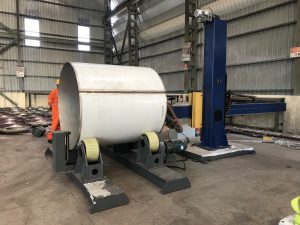
In this evolving landscape, the tankı parlatma makinesi is no longer just auxiliary equipment — it has become a core production asset.
In 2026, automatic polishing technologies are reshaping how manufacturers approach tank surface finishing, bringing higher efficiency, better consistency, and smarter process control.
Why Traditional Manual Polishing Is No Longer Enough
For decades, tank polishing relied heavily on manual grinding and buffing. While skilled operators can achieve acceptable finishes, the process presents several limitations:
-
Inconsistent surface roughness
-
High labor dependency
-
Low production efficiency
-
Difficulty polishing large-diameter tanks
-
Operator fatigue and safety risks
As tank diameters increase and hygiene standards tighten, manual polishing simply cannot guarantee stable Ra values across the entire surface.
This is where modern automated solutions step in.
Technological Breakthroughs in Automatic Tank Polishing Machines
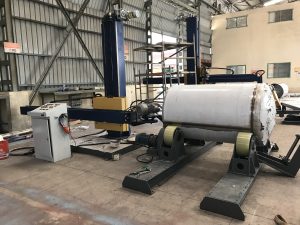
The new generation of automatic tank polishing machines integrates advanced mechanical systems with intelligent control platforms. Several technological upgrades are defining the 2026 market:
1. CNC and PLC Integrated Control Systems
Modern polishing machines now feature CNC or PLC-based control systems that allow precise parameter adjustment, including:
-
Polishing pressure
-
Rotation speed
-
Feed rate
-
Tool path trajectory
This ensures repeatable polishing results across batches, dramatically improving consistency.
2. Servo-Driven Polishing Arms
Servo motors enable smooth movement and accurate positioning of polishing heads. Compared with traditional hydraulic systems, servo systems offer:
-
Higher precision
-
Lower energy consumption
-
Reduced vibration
-
Longer equipment lifespan
3. Automatic Pressure Compensation
Uneven polishing pressure often causes surface variation. Advanced systems now automatically adjust pressure based on surface curvature, ensuring uniform mirror finishing even on large cylindrical tanks.
4. Internal and External Polishing Integration
Modern tank polishing equipment can handle:
-
External surface finishing
-
Internal wall polishing
-
Weld seam grinding
-
Mirror finish processing
This all-in-one capability reduces production steps and shortens delivery cycles.
Measurable Performance Improvements
Manufacturers upgrading to automated tank polishing systems report significant improvements:
-
30–50% productivity increase
-
Reduced labor cost by up to 40%
-
Stable surface roughness (Ra ≤ 0.4μm achievable)
-
Improved surface gloss consistency
-
Lower abrasive consumption
More importantly, automated systems ensure compliance with international hygiene and safety standards required in export markets.
Key Application Industries Driving Demand
The demand for high-performance tank polishing solutions is expanding rapidly in several industries:
Food & Beverage Equipment Manufacturing
Sanitary tanks used in dairy, brewing, and beverage production require smooth surfaces to prevent bacterial growth.
İlaç Endüstrisi
GMP-compliant production equipment demands ultra-smooth, easy-to-clean internal surfaces.
Kimyasal İşleme
Corrosion resistance is directly linked to surface finish quality, especially for stainless steel pressure vessels.
Energy & Industrial Storage
Large storage tanks require efficient surface finishing solutions to handle oversized diameters.
These industries increasingly favor automated systems over manual polishing due to efficiency and quality control requirements.
Sürdürülebilirlik ve Çevresel Hususlar
Sustainability is another important factor influencing purchasing decisions in 2026.
Advanced tank polishing machines now include:
-
Integrated dust collection systems
-
Energy-efficient motors
-
Optimized abrasive usage
-
Reduced material waste
These features not only lower operational costs but also help manufacturers meet environmental compliance standards in Europe, North America, and emerging markets.
Market Outlook: Smart Manufacturing Is Accelerating
The global shift toward smart factories and Industry 4.0 is accelerating equipment automation across manufacturing sectors. Surface finishing, once considered a secondary process, is now recognized as a quality-critical stage.
International buyers are increasingly seeking:
-
Customizable machine sizes
-
Automated polishing programs
-
Multi-diameter compatibility
-
Intelligent monitoring systems
Export-oriented equipment manufacturers must adopt advanced polishing technologies to stay competitive.
Doğru Tank Parlatma Makinesini Seçmek
When selecting a tank polishing solution, manufacturers should consider:
-
Maximum working diameter range
-
Internal vs. external polishing capability
-
Level of automation (semi-auto vs. full CNC)
-
Required surface roughness standard
-
Future scalability
A well-configured system can provide long-term cost savings and higher ROI compared to traditional polishing methods.
The Future: From Automation to Intelligent Optimization
Looking ahead, tank polishing machines are expected to incorporate:
-
Real-time surface detection sensors
-
AI-based polishing parameter optimization
-
Remote monitoring systems
-
Predictive maintenance functions
These innovations will further reduce manual intervention and improve operational reliability.
Surface finishing is entering a new era — one where precision, automation, and intelligence define competitiveness.
Çözüm
The evolution of the tank polishing machine reflects a broader transformation in industrial manufacturing. As quality standards tighten and labor costs rise, automated polishing systems are becoming essential rather than optional.
Manufacturers who invest in modern polishing technology today will gain:
-
Higher efficiency
-
Stable quality output
-
Lower operational risk
-
Stronger international competitiveness
The shift toward automation is not just a trend — it is the future of surface finishing.
📩 Interested in upgrading your tank polishing process?
Contact our engineering team today to discuss customized automatic tank polishing solutions tailored to your production needs.
Sıkça Sorulan Sorular (SSS)
1. What is a tank polishing machine used for?
A tank polishing machine is used to grind, buff, and polish the internal and external surfaces of stainless steel tanks and pressure vessels. It improves surface smoothness, enhances corrosion resistance, and ensures the hygienic standards required in industries such as food processing, pharmaceuticals, and chemical manufacturing.
Automatic tank polishing machines provide consistent surface finishing results while significantly reducing labor costs and production time.
2. What surface finish can an automatic tank polishing machine achieve?
Modern automatic tank polishing machines can achieve surface roughness levels as low as Ra ≤ 0.4 μm, depending on material type, abrasive selection, and polishing process configuration.
For sanitary applications such as pharmaceutical and food-grade tanks, mirror finish polishing is commonly required to ensure easy cleaning and contamination prevention.
3. What is the difference between manual polishing and automatic tank polishing machines?
Manual polishing relies heavily on operator experience and can result in inconsistent finishes, especially for large-diameter tanks.
Automatic tank polishing machines offer:
-
CNC or PLC-controlled precision
-
Stable polishing pressure
-
Repeatable surface quality
-
Higher production efficiency
-
Lower long-term labor costs
For large-scale industrial production, automated systems are significantly more reliable and cost-effective.
4. Can a tank polishing machine polish both internal and external surfaces?
Yes. Advanced tank polishing machines are designed to handle both internal and external polishing processes. Some models include adjustable polishing arms and rotating systems to accommodate different tank diameters and configurations.
Integrated systems reduce handling time and improve workflow efficiency.
5. How do I choose the right tank polishing machine for my factory?
When selecting a tank polishing machine, consider:
-
Maximum tank diameter and length
-
Required surface roughness (Ra value)
-
Level of automation needed
-
Production volume
-
Industry compliance standards
Consulting with an experienced manufacturer ensures the equipment matches your technical and production requirements.
6. Is an automatic tank polishing machine suitable for the sanitary industries?
Absolutely. Automatic tank polishing machines are widely used in the food, beverage, and pharmaceutical industries because they provide consistent, smooth finishes that meet strict hygiene standards.
High-precision polishing reduces bacterial adhesion and improves cleanability, making it ideal for sanitary stainless steel equipment manufacturing.